
Business Model Adjustment
In situations where profit is too low and cash flow begins to dry up, the biggest mistake we can make is trying to force our sales “onto steroids” by doing the same things as before, only louder. The most common mistakes are creating a new website, changing visual identity, increasing activity and posting on social media, hiring additional sales representatives, and similar actions. Or to put it differently — if we have a “tumor” in our business, this strategy will only make it grow. Along this path, we often go through periods of reduced profit and cash flow as a result of our “intensified” activities. The “dopamine culture” (the hormone of happiness) fostered by technology and smartphone use, which creates a constant and uncontrolled need for “micro-excitement,” plays a major role here — it is far more exciting to “pump up” marketing and sales activities than to take the necessary time to identify the real problems in the business. However, an experienced business owner has a wide range of tools and levers in their entrepreneurial arsenal to increase profit and cash flow without falling into the trap of disproportionate investment in marketing and sales. In some situations, it is not enough to simply reallocate resources in a new way or improve efficiency; sometimes it is necessary to change the existing business model. When it comes to growth and profitability, we rarely reach for major changes to the business model — yet sometimes that is exactly where the root of the problem lies. There are five key questions that must be answered when it comes to the business model: How many resources (time, effort, money) must we invest? Over what period of time? How much revenue do we want to generate? Is that revenue sufficient to justify the costs of investment and maintenance, with adequate profitability? Can we achieve a return on investment within the planned timeframe? In our efforts to become more successful, most of us tend to see the solution only in increasing revenue, instead of taking enough time to gain clarity on the answers to the questions above. Signs that we have outgrown our current business model usually become visible when the business starts to “creak” and inefficiencies begin to surface — in other words, when more “drama” than usual appears in the workplace as profitability declines. At that point, we need to change the business model, not the marketing strategy, nor commission a new visual identity or new website. Siniša Drobnjak
Zubcast – The most successful dental podcast in the region
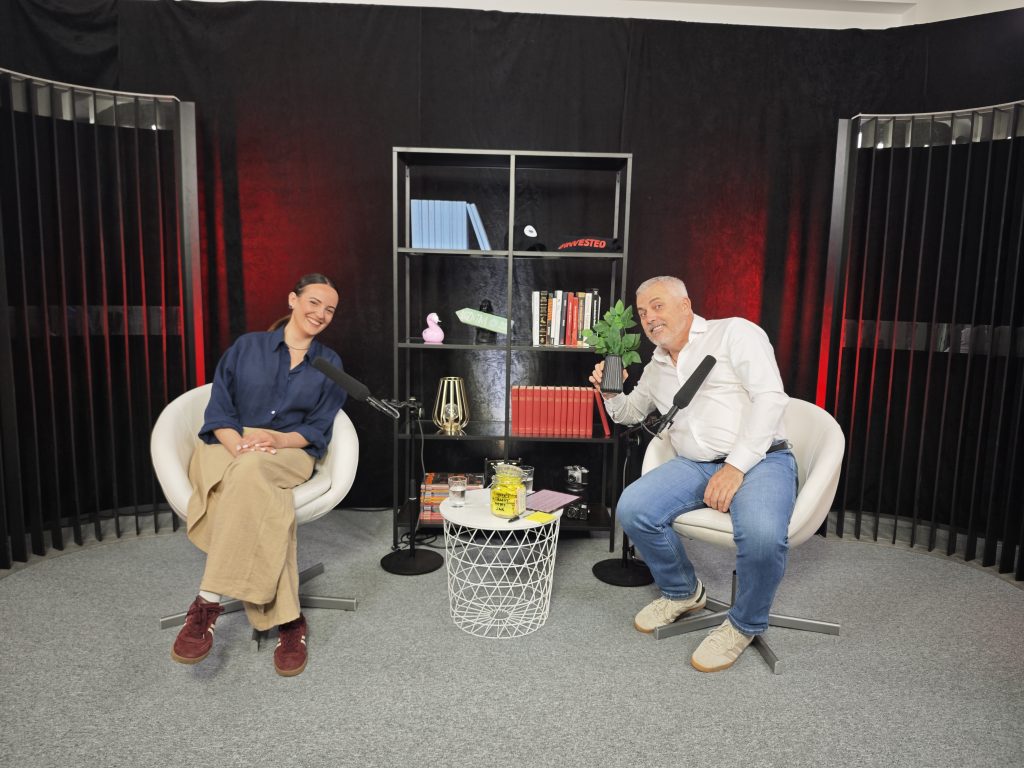
Jovana Lazarević, dentist and media enthusiast, has become an indispensable name in the region when talking about modern dentistry through the prism of education and communication. With a combination of expertise and media knowledge, Jovana started Zubcast – the most influential podcast about dentistry in the region, which successfully opened the door for the exchange of knowledge, innovations and experiences among professionals in the profession, but also younger generations and students of dentistry. Her work doesn’t just end on podcasts; actively participates in the organization and reporting of leading dental congresses and events, such as Europerie and DBL Summit, creating a safe and innovative environment for dialogue about the future of the profession. The path to Zubcast as a leading platform Jovana began her journey towards this project while studying dentistry, when she discovered educational podcasts, which inspired her to use the media channel to convey knowledge in an understandable and practical way. “I had no idea about influencers, but about influence in general,” Jovana recalls of her initial steps. The podcast was created out of a desire to help young colleagues gain a broader perspective on dentistry, through conversations with experienced and innovative guests who share their life stories and professional knowledge. Balancing dentistry and the media Although she has worked in dental offices, Jovana admits that clinical work was not enough for her personal fulfillment. “I didn’t want to spend my life indoors, under air conditioning,” she says, emphasizing that communication and understanding patients’ needs are key to good practice. She attributes her success to a combination of clinical skills and excellent communication skills, which resulted in great patient trust. Influence and audience of Zubcasta Zubcast quickly gained the trust of a wide audience, primarily young, but also more experienced dentists who value innovation and continuous education. “I am my own target group,” says Jovana, emphasizing the importance of openness to new knowledge and life experience in dentistry that cannot be found elsewhere. One of the biggest signs of the platform’s success are the thousands of views and messages of support it receives daily. Important topics and the future of the project Jovana actively participates in communication and reporting on major dental events and organizes her own educational events, such as the announced Zubcast event in Belgrade. “We aim to create an event where people can relax and talk about things they wouldn’t easily tell their colleagues,” he says about the importance of the non-clinical part of dentistry, such as financial literacy and communication. Her vision is to remain a dentist with an active educational role as a mediator between professional knowledge and the audience. “I like to be that mediator who comes up with ways to bring knowledge closer to people in an interesting way,” concludes Jovana. This is just part of the conversation from the new episode of the DBL Podcast – watch the whole show on our Youtube channel and don’t forget to subscribe!
From the hospital to her own practice: Ana Štanfel Hauser’s story about aesthetic medicine, ethics and entrepreneurship

Aesthetic medicine in Croatia has been experiencing strong growth in recent years, and among those who have left their mark on the scene is Dr. Ana Štanfel Hauser, a general surgery specialist with extensive experience in abdominal surgery. In an interview with the DBL Podcast, Ana spoke openly about her professional journey, the challenges of transitioning from the public to the private sector, but also about the ethical dilemmas that every responsible doctor faces. “Being a doctor and being an entrepreneur are actually two different worlds and it’s hard to somehow fit them into one system that moves together,” Ana pointed out, describing how the coronavirus pandemic was a turning point for her transition to private practice. Returning from Dublin and the closed hospitals prompted her to open her own practice: “I had a lot of calls from people… and then I realized that it would actually be good, I had to call that private hospital every time and ask when they had an appointment, then I realized why I shouldn’t have my own practice, because I see that I actually have my own patients and that’s how it started.“ Challenges and responsibilities of aesthetic medicine Ana comes from a family of doctors and emphasizes how much the experience of working at Vinkovci Hospital, with fellow war surgeons, shaped her professional attitude: “Working with people who gained experience in war is something completely different… growing up with them was a privilege. I couldn’t have received a better education anywhere in the world at that time.“ She entered aesthetic medicine gradually, first out of curiosity, and later out of a desire to offer more with her knowledge and experience: “My surgical experience actually helped me understand these injectable things. In the end, I can now say that I solve other people’s complications every day, which makes me happy.“ However, she warns of the dangers of frivolity and a superficial approach: “These procedures are not for everyone and not everything is for everyone. We can all have everything operated on and put everything in. But do we need that?… Nothing is simple in aesthetics and it’s not cosmetics, it’s medicine,” Ana points out. Ethics, education and attitude towards patients Ana emphasizes the importance of education and ethics among doctors: “I think the problem is both with doctors who approach this in a way as if it were a trade, and with patients who don’t understand the consequences, perhaps because they are not well educated. And as doctors, we actually have an obligation to educate them, that nothing is harmless, that nothing is completely destructive, and that everything has its consequences.“ For her, the patient always remains a patient, not a client: “I always say patient precisely because I make the decision and I’m the one who will do something or not… I very often bring patients back and they actually leave happy with the comment ‘Thank you for telling me that.’“ Trendovi, društvene mreže i budućnost struke When asked about trends and the influence of social media, Ana is clear: “The word trend in medicine, including aesthetic medicine, should not exist. I think it all comes down to the education of doctors and ethics.” She is particularly concerned about young people: “Young girls and boys have a problem here. I think they have a big problem. This perception of their beauty, how they should look… No one talks about where they will go to school and what they will be when they grow up. They just take pictures and look at their contours and physiognomy.“ Although the legal regulations are not yet strict enough, Ana believes that consultations with a psychiatrist should become mandatory before major procedures: “Maybe something like that should be done for the future. That a consultation with a psychiatrist is required before a major procedure.“ Entrepreneurship and personal development Opening her own practice was a combination of vision, determination, and family support: “The most important thing for you is to wake up at five. When everyone is sleeping… You’ll get there. That’s for sure, I’m sure of it.” She is driven by perfectionism in her work, but also by responsibility towards her patients: “I constantly care for my patients… I don’t think there’s any fear. They recognize that, too.“ Finally, Ana tells her young colleagues: “It’s not that scary if you read the rules. It’s not difficult to open a practice. You should master as many skills as possible during your specialization, no matter what your profession in medicine is. And in fact, when you master the skills and knowledge, there is no fear, no matter where or what happens.“ ——- This is just part of the conversation from the new episode of the DBL Podcast – watch the whole show on our Youtube channel and don’t forget to subscribe!